
Project Overview
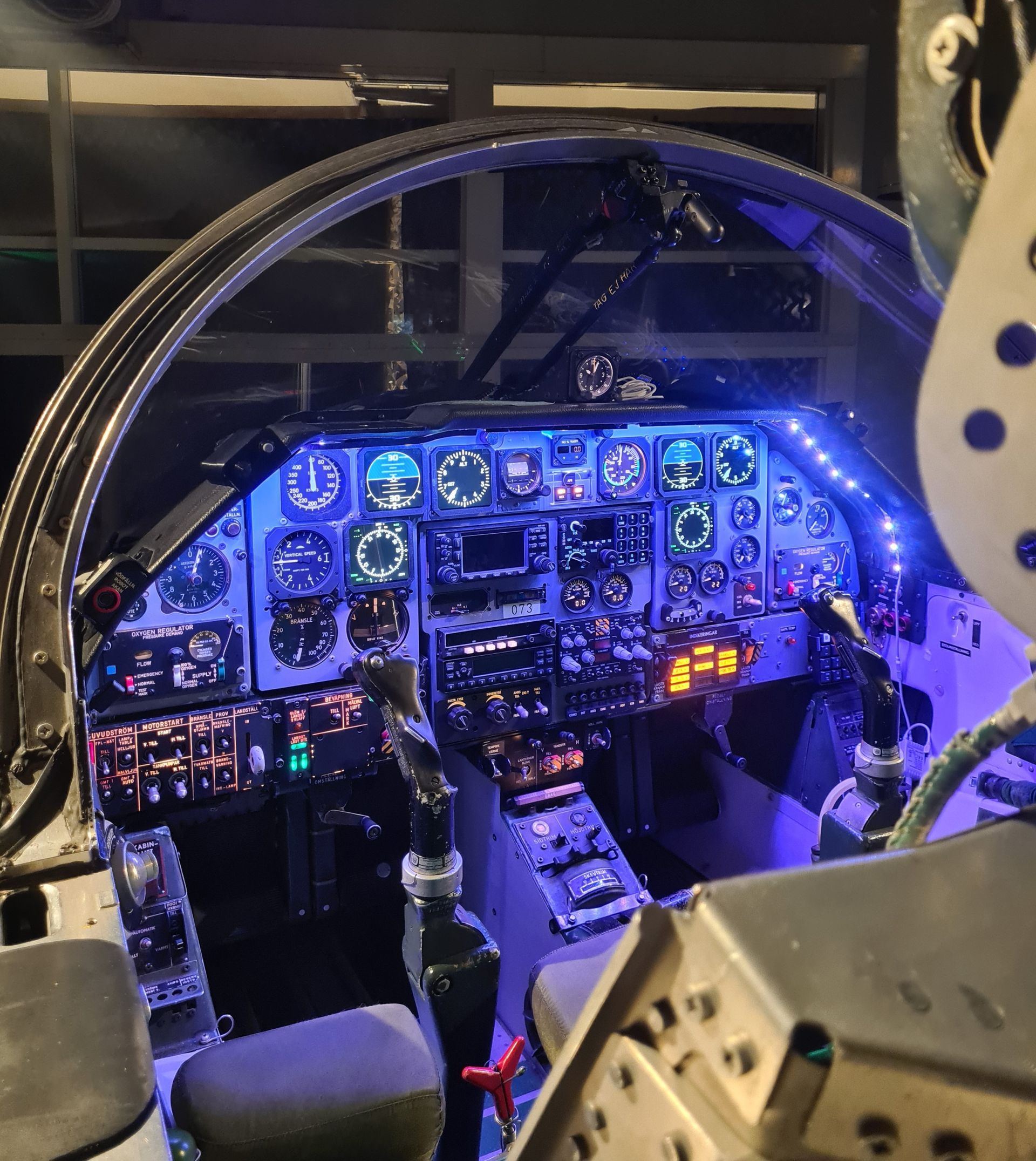
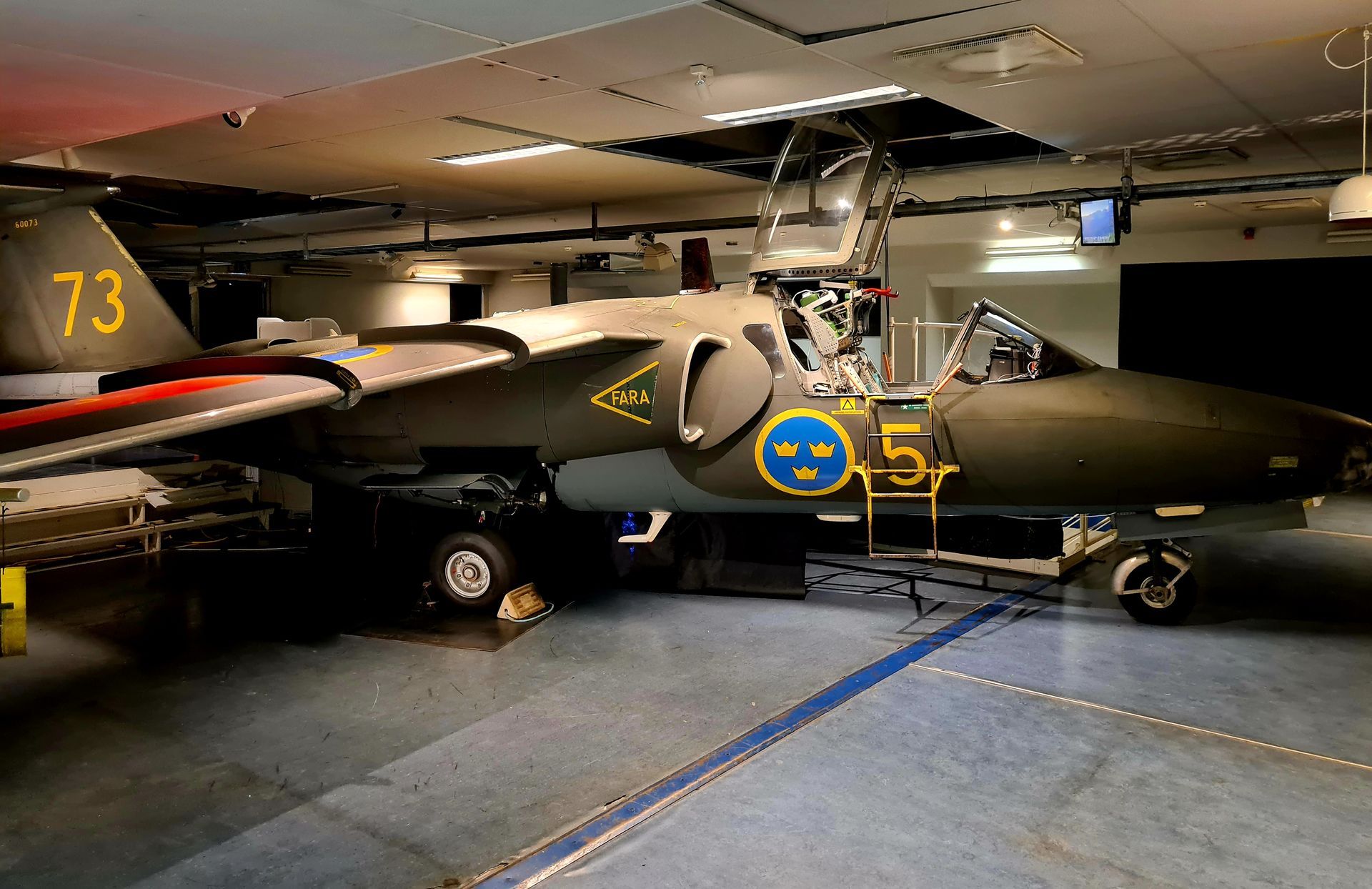
A customer had a decommissioned Swedish SK60 trainer jet and wanted it converted into a mixed-reality simulator. The objective was to preserve as much original cockpit functionality as possible while making the platform practical and safe for daily simulator operation.
Aircraft Power and Safety Strategy
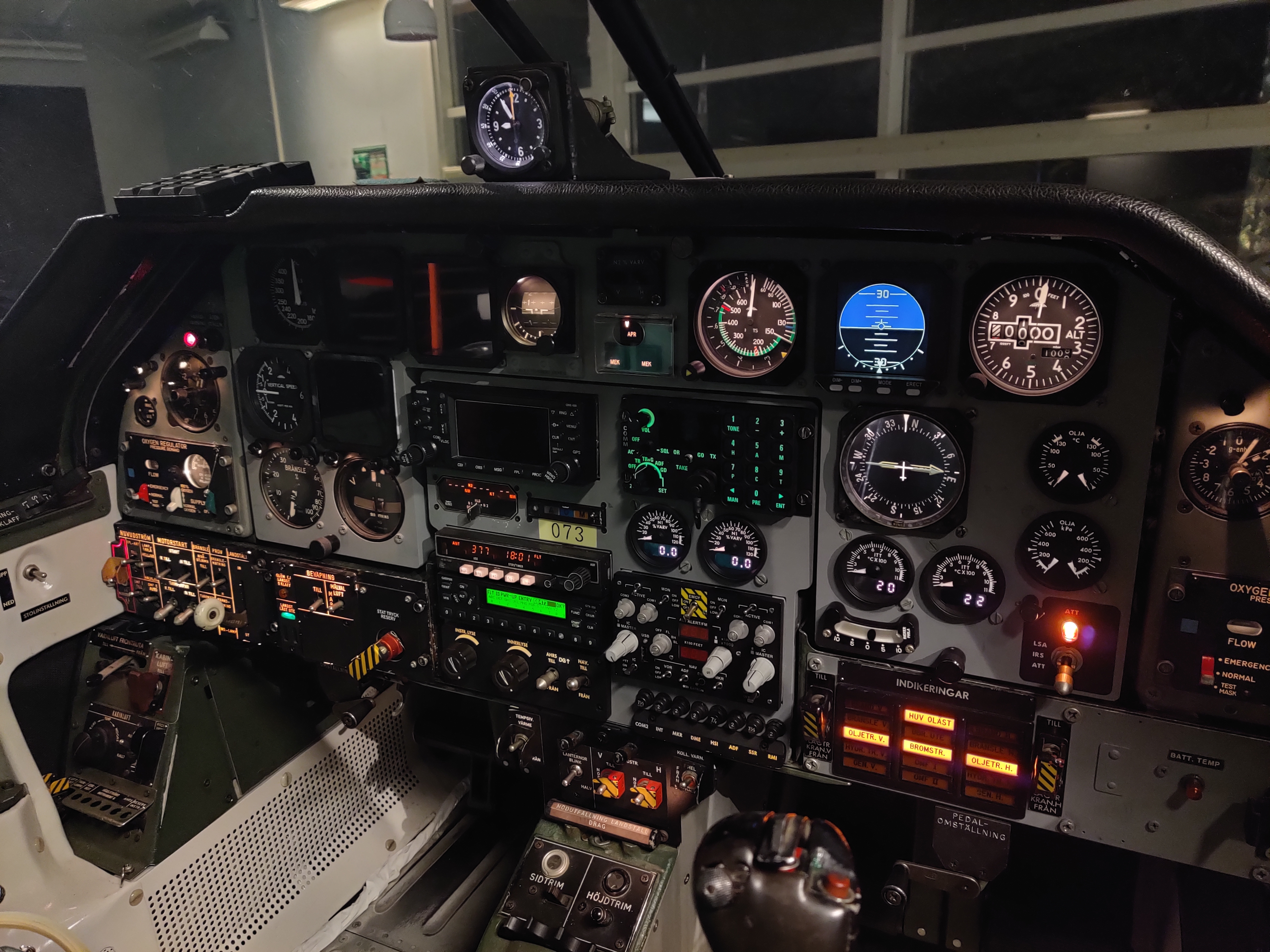
Using original schematics, selected aircraft systems were powered from native 28VDC via a 3 kW power supply. This allowed cockpit lighting and instruments to operate as intended.
At the same time, hazardous subsystems such as landing gear actuation and engine ignition were disconnected to prevent unintentional activation in a simulator environment. Core cockpit functionality remained intact, including canopy maneuvering, seat lift motors, and original instrument behavior.
The primary controls, including gear lever, flaps, trim, joystick, and throttles, were interfaced to the simulator software.
Mixed-Reality Implementation
The simulator software is DCS, and the headset platform is Meta Quest 3 running Virtual Desktop. To blend physical and virtual cockpit content, the simulator's internal 3D model textures were modified with a pass-through capable texture workflow in Virtual Desktop.
This makes the panel and lower cockpit region visible in real hardware while the canopy and outside-world view are rendered in VR, producing a mixed-reality experience that preserves cockpit presence without sacrificing immersion.
Instrument Modernization
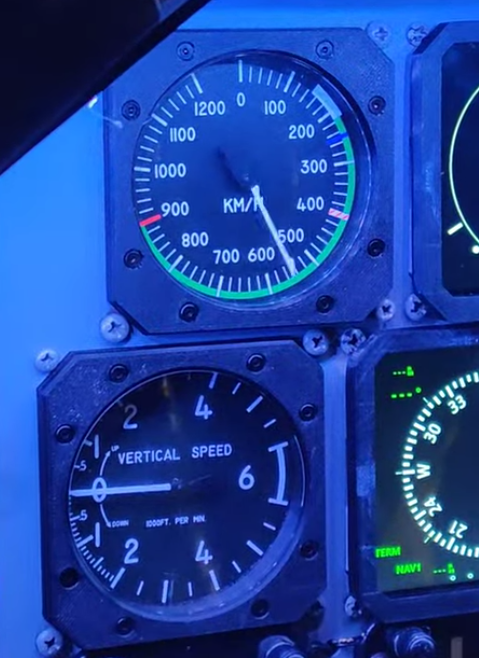
Additional simulated gauges were manufactured using automotive-grade silent stepper motors with 600 steps over 270 degrees of rotation. Square OLED panels were also integrated, replacing selected original instrument display internals to simplify maintenance and improve display consistency.
The OLED-based instrument rendering pipeline runs on a separate PC, keeping gauge rendering isolated from the main simulation host.
Operational Outcome
We also developed a startup workflow that allows instructors and other non-technical users to operate the simulator reliably without needing a dedicated technician present for every session.
The result is a robust training platform that combines authentic aircraft hardware behavior with a practical mixed-reality software stack, while keeping day-to-day operation accessible for instructional use.