
Project Overview
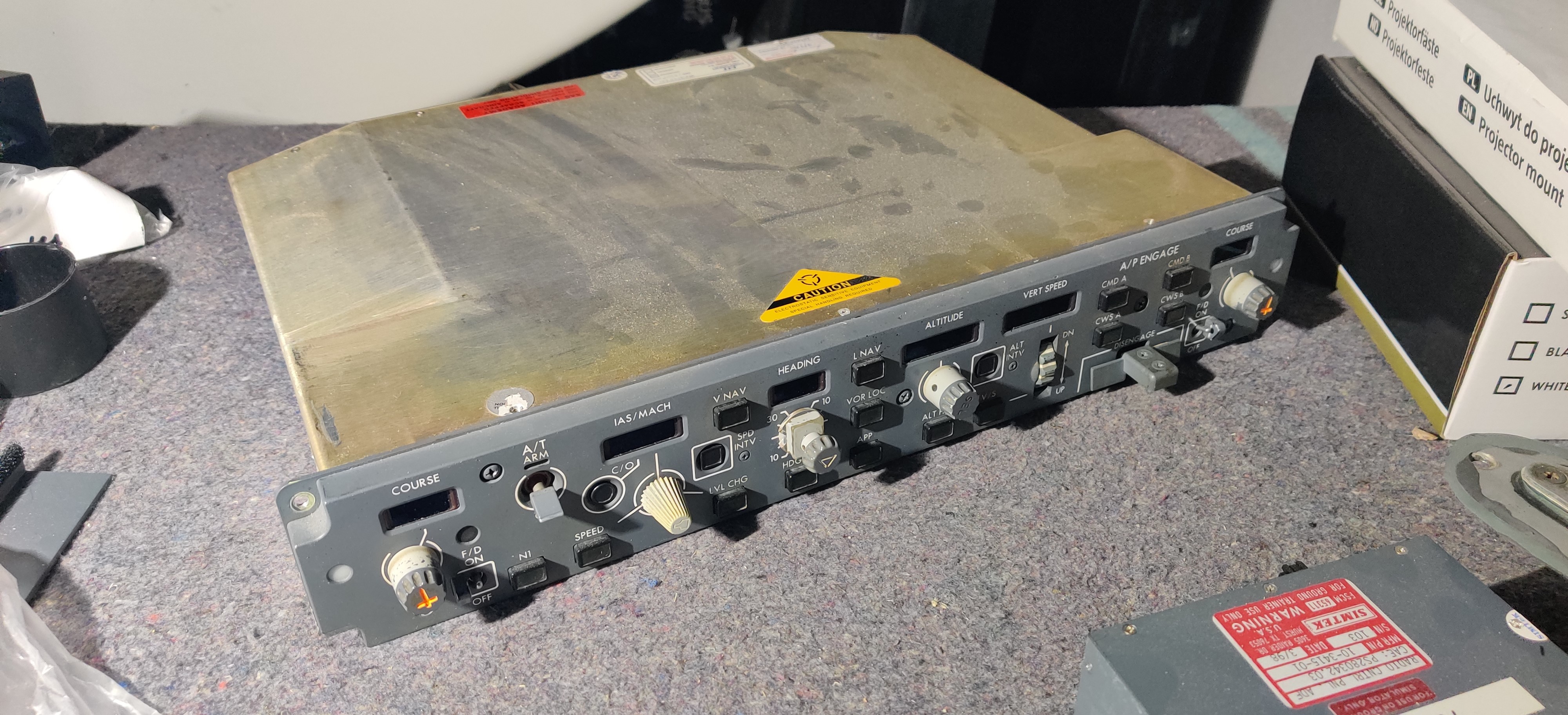
We were tasked with bringing an OEM Honeywell 737 MCP back into service for simulator interfacing. The unit had been in storage, powered off and a bit dusty, but the goal was straightforward: make it work again as a functional cockpit interface.
ARINC 429 Interface
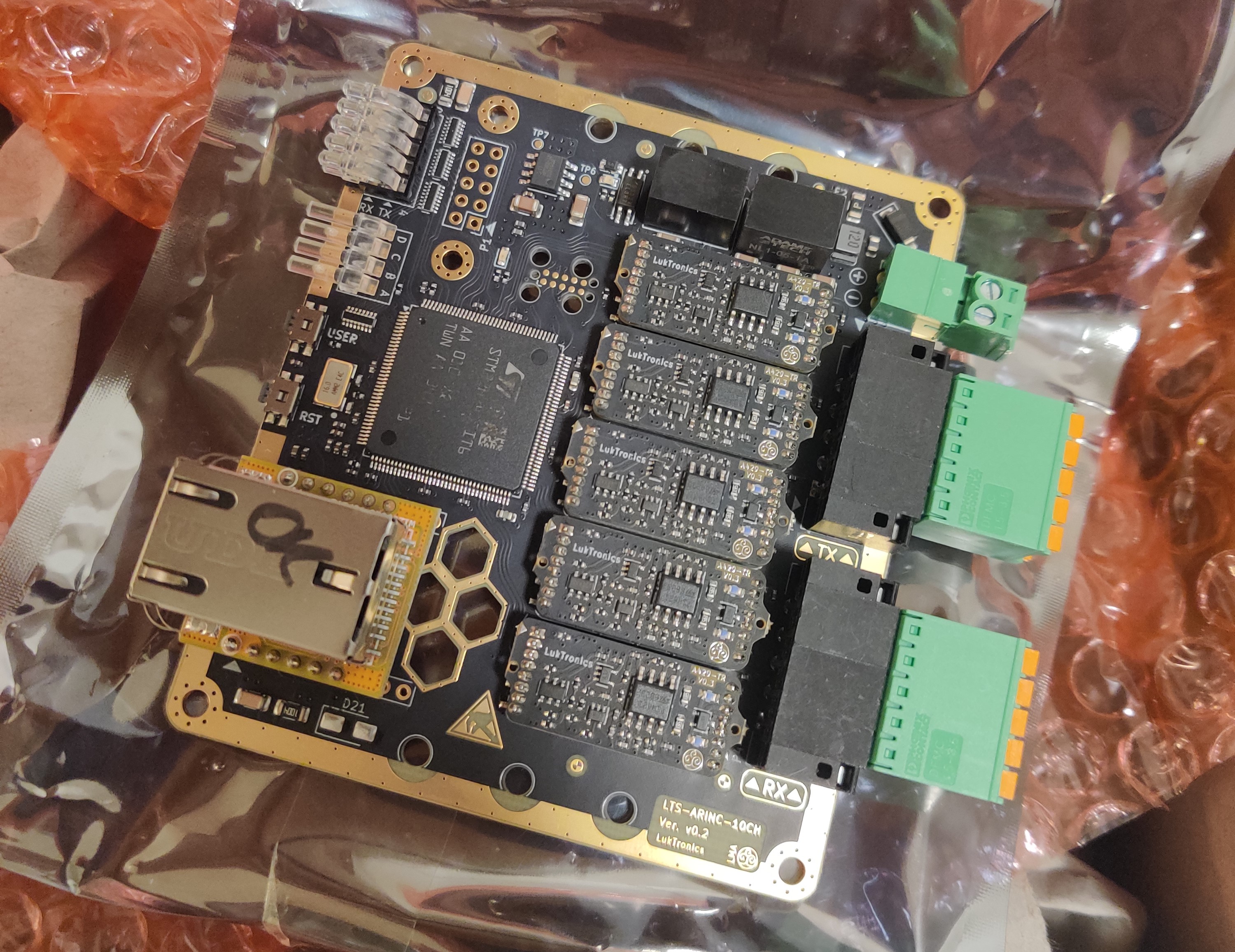
The MCP requires ARINC 429 interfacing, so we ordered an ARINC 429 development kit interface card from Lucas at Luktronics. The card uses an STM32 and provides 5+5 ARINC 429 inputs and outputs. It is controlled through his software, Aviologic, which makes it straightforward to configure the interface card by sending ARINC 429 words at a predefined rate.
Because the interface card communicates over ethernet, both configuration and command transmission can be handled over the network. Aviologic also supports Python programming directly in the tool, with separate function handlers for transmit and receive paths.
Wiring and Configuration
The unit was wired up using the original schematics and powered with 28VDC. The ARINC channels were connected to the interface card and then configured through Aviologic so that the MCP responded correctly.
From there, ARINC words were generated and handled by Python code running inside Aviologic, which provided a clean and scalable way to drive the hardware without needing a separate Python server.
Result
The final result was a working MCP with the seven-segment displays active and a selected number of buttons responding correctly.
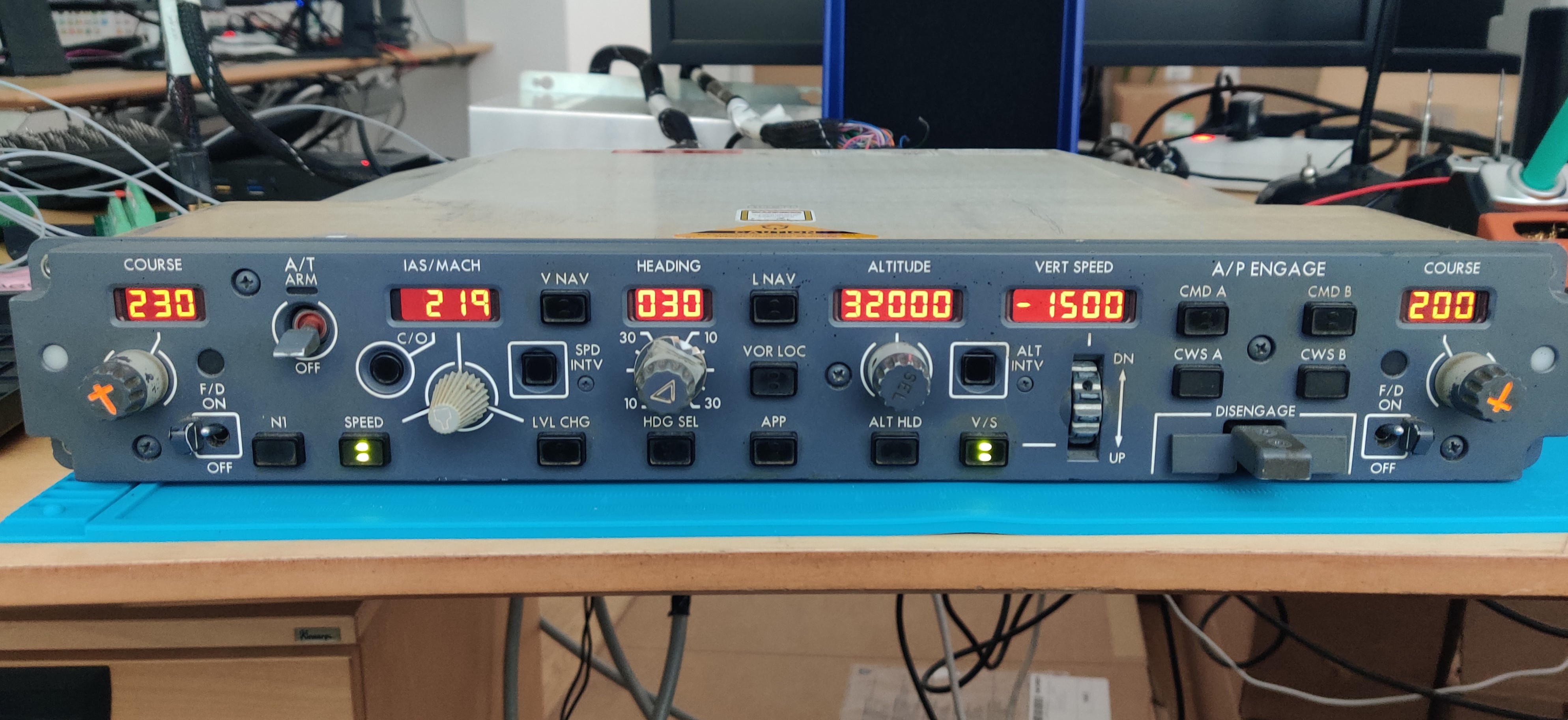
This setup is a practical example of using modern networked control, off-the-shelf ARINC 429 hardware, and Python to restore an OEM flight deck component for external use without requiring a flight computer at the unit itself.