
Project Overview
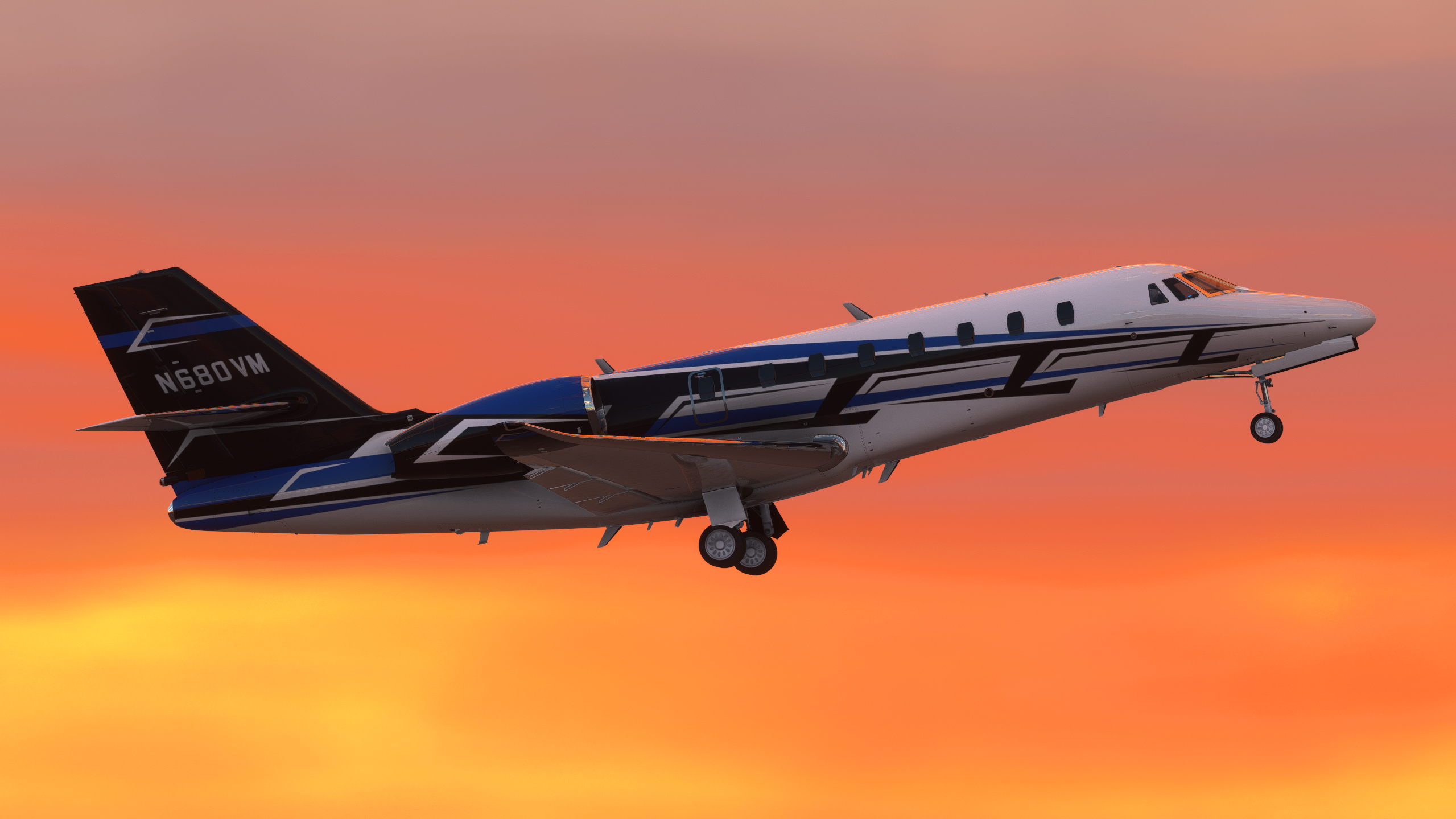
We implemented a highly authentic datalink system for a simulated Cessna Citation (C680) fitted with Garmin G3000/5000 avionics. The goal was to reproduce realistic ACARS and CPDLC behavior over FANS, matching the look, navigation, and communication flows pilots expect in certified hardware.
The project included the creation of roughly eighty custom pages to mirror the aircraft's datalink UI and underlying message models, together with routing and parsing systems so incoming telex/ACARS messages and CPDLC downlinks are categorized and presented correctly.
ACARS Features
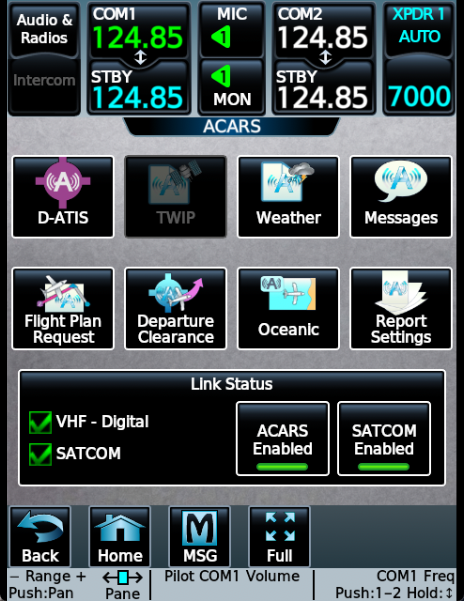
The ACARS implementation supports:
- D-ATIS retrieval and parsing
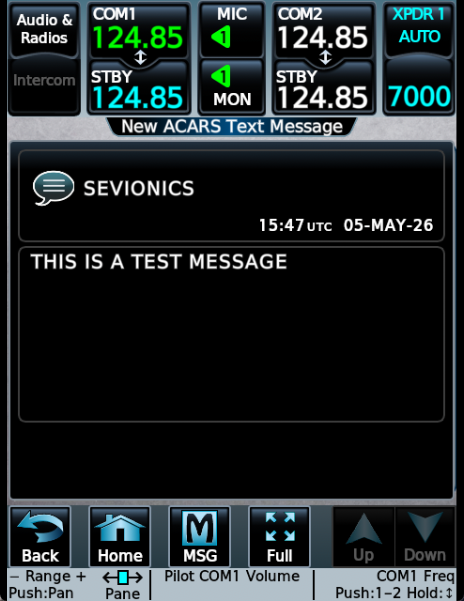
- Telex messaging with send/receive flows
- Flight-plan requests and replies
- Departure clearance exchanges
- Oceanic requests and oceanic message handling
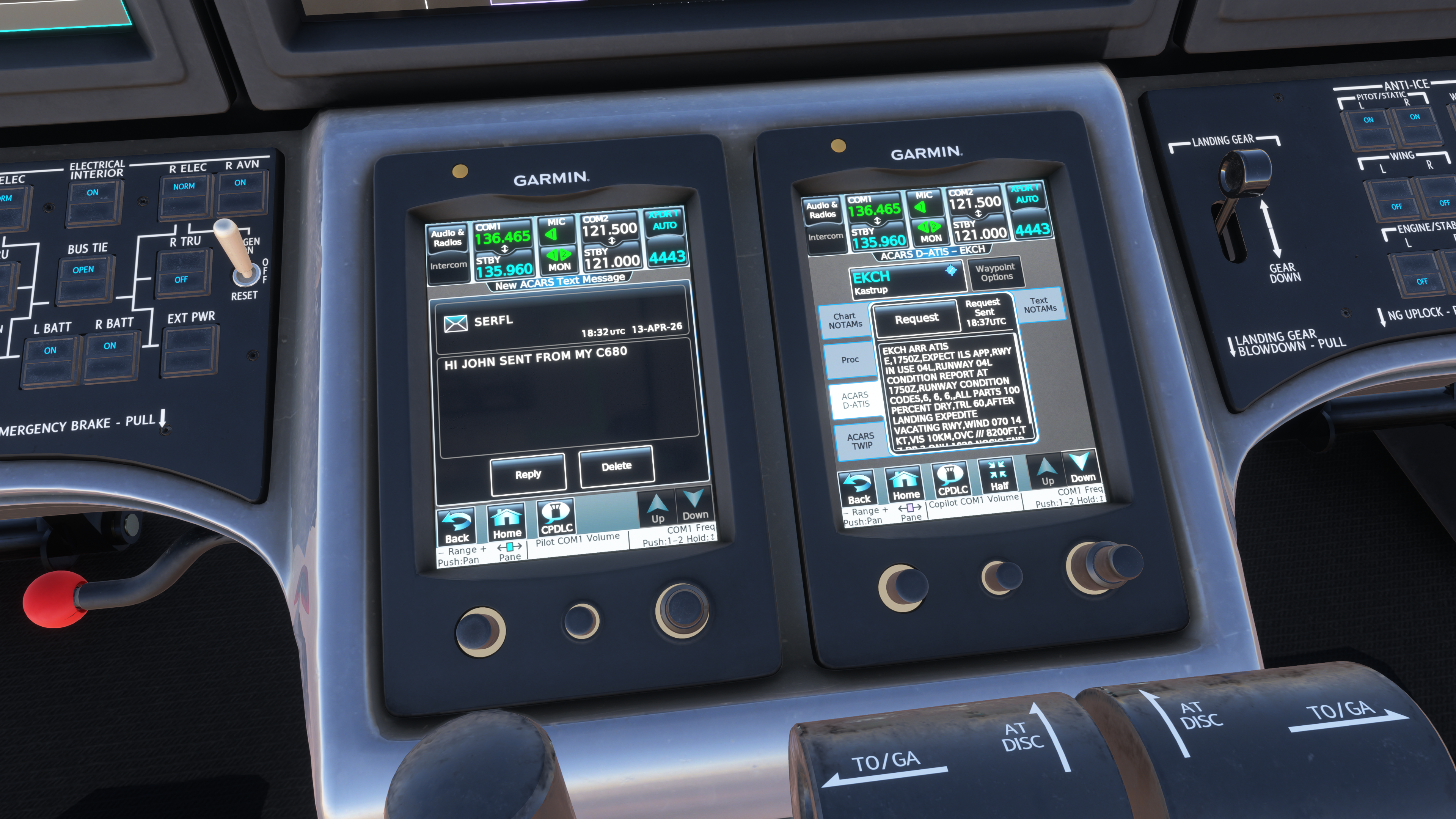
Messages are sent as text through a datalink service provider and are routed by message type. The system parses incoming telex/acars traffic and surfaces it under the appropriate UI category (for example, a departure clearance appears in the Departure Clearance view rather than as a generic telex item).
CPDLC and GOLD Compliance
CPDLC behavior follows the GOLD (Global Operational Data Link Document) standard. We implemented the majority of UM/DM message elements and mapped them into CPDLC message structures that the datalink provider accepts.
Key features:
- Correct logon, transfer/handover, and termination flows following GOLD recommendations
- Per-element message construction so individual UM/DM components are represented accurately
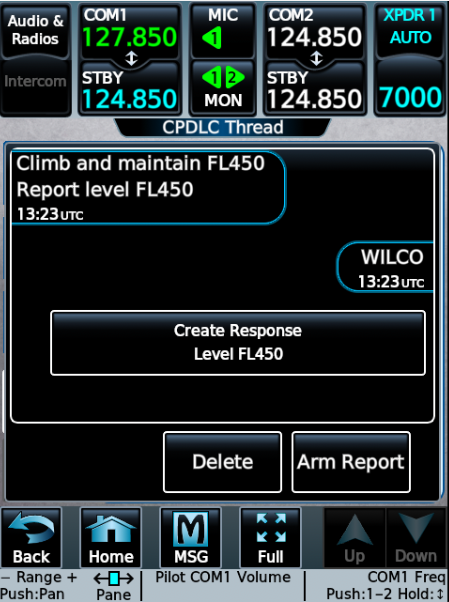
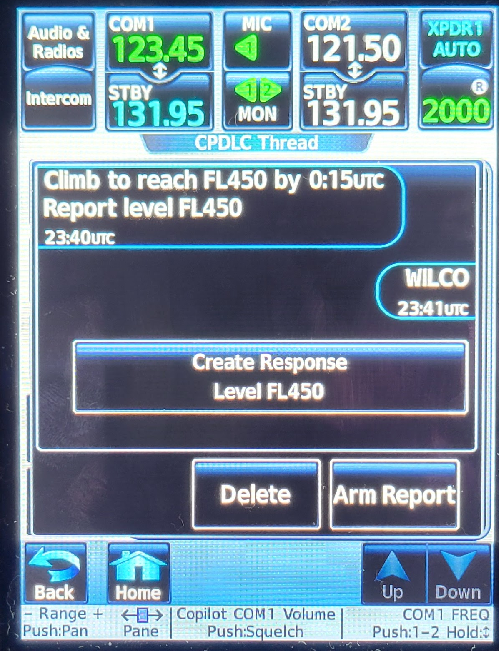
- A thread-based CPDLC UI that mirrors pilot references and Garmin G3000/5000 styling
The implementation relied on pilot-provided references where the manuals were incomplete. This helped match page layouts, labels, and expected interaction patterns used in real aircraft.
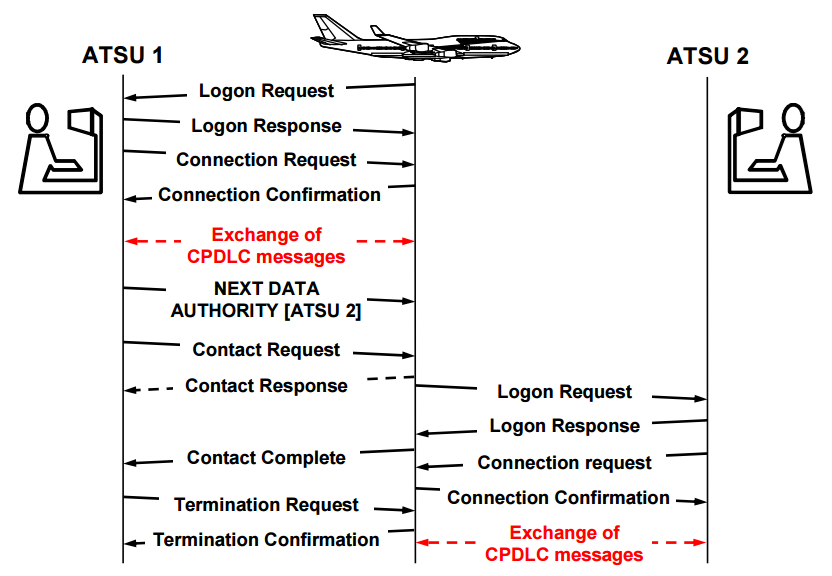
Figure 2‑16 from the GOLD document — "Nominal sequence for initial CPDLC connection establishment and transfer of CPDLC connection using air‑ground address forwarding."
UI and Page Work
Approximately eighty custom pages were created to model every relevant piece of the datalink UI and underlying state. Pages include logon/setup, address forwarding, thread views, message element editors, and status screens. The thread and message pages were designed to match pilot expectations, with quick-access buttons and consistent formatting for UM/DM elements.
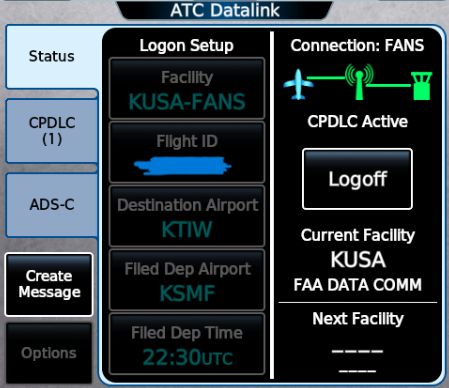
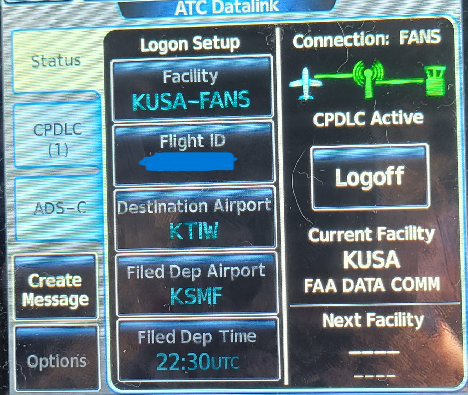
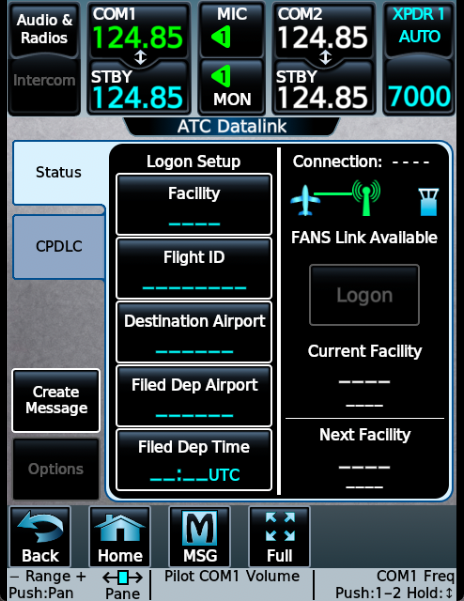
The ATC datalink page shows logon setup and connection details with correct animations and link state.
Implementation Notes
- Messages are serialized into CPDLC formats and passed to a datalink service provider that handled message transport, persistence, and routing.
- The ACARS subsystem supports categorization and inbox routing so pilots see messages in the appropriate context.
- The CPDLC implementation includes stateful session handling (logon, handover, termination) to reflect real-world airborne/ground workflows.
Result
The finished system provides an immersive, pilot-authentic datalink experience in a simulated Cessna Citation. It is suitable for demonstration, training, and validation scenarios where realistic datalink behavior and accurate UI flows are required.
For questions or interest in the solution, please contact us.